
Fractures of the Wrist, Hand, and Fingers
Fractures of the Wrist, Hand, and Fingers
Fractures of the wrist, hand, and fingers are among the most common orthopedic injuries. These injuries can result from falls, sports activities, workplace accidents, or direct trauma. The wrist and hand contain 27 bones, and a fracture to any of these bones can significantly affect hand function, grip strength, and daily activities.
Early and accurate diagnosis is essential to ensure proper healing and to prevent long-term complications such as stiffness, weakness, chronic pain, and arthritis. Whether the fracture is a simple crack or a complex break involving multiple fragments, appropriate treatment can restore function and relieve pain.
Common Types of Wrist, Hand, and Finger Fractures
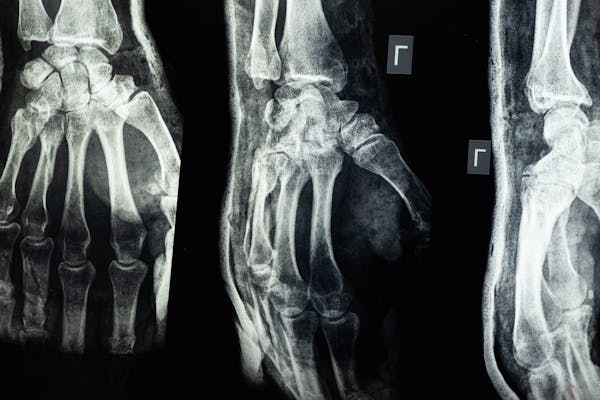
The wrist, hand, and fingers are made up of a complex arrangement of bones, joints, and soft tissues. Common fracture types include:
- Distal radius fracture — the most common wrist fracture, often resulting from a fall onto an outstretched hand. Also known as a Colles fracture or Smith fracture depending on the direction of displacement.
- Scaphoid fracture — a fracture of the small scaphoid bone at the base of the thumb side of the wrist. These fractures can be difficult to detect on initial X-rays and carry a risk of poor healing due to limited blood supply.
- Metacarpal fractures — fractures of the long bones of the hand. A Boxer’s fracture is a common metacarpal fracture involving the neck of the fifth metacarpal.
- Phalanx fractures — fractures of the finger bones. These are very common and can involve the proximal, middle, or distal phalanx.
- Bennett and Rolando fractures — fractures at the base of the thumb metacarpal, often involving the joint surface.
Causes and Risk Factors
Fractures of the wrist, hand, and fingers can occur in individuals of all ages. Common causes and risk factors include:
- Falls — especially falling onto an outstretched hand (FOOSH injury)
- Sports injuries — contact sports, ball-handling sports, skiing, and cycling
- Direct trauma — crush injuries, striking a hard object, or workplace accidents
- Motor vehicle accidents
- Osteoporosis — weakened bones are more susceptible to fracture, particularly in older adults
- Repetitive stress — overuse activities can lead to stress fractures over time
Symptoms
Symptoms of a fracture in the wrist, hand, or fingers may include:
- Immediate pain at the site of injury, often severe
- Swelling and bruising
- Visible deformity or abnormal alignment of the finger or wrist
- Difficulty moving the affected finger, hand, or wrist
- Tenderness to touch over the fracture site
- Numbness or tingling in the fingers (if nerves are affected)
- Stiffness and loss of range of motion
- Grinding or crepitus sensation with movement
Diagnosis
A thorough physical examination and imaging studies are essential for accurately diagnosing fractures of the wrist, hand, and fingers. Diagnostic methods may include:
- X-rays — the primary imaging tool for identifying fractures, assessing alignment, and evaluating joint involvement
- CT scan — provides detailed cross-sectional images of the bones and is particularly useful for complex fractures, scaphoid fractures, and surgical planning
- MRI — may be ordered when a fracture is suspected but not visible on X-ray, or to evaluate associated soft tissue injuries such as ligament tears
- Physical examination — assessment of tenderness, swelling, range of motion, grip strength, and neurovascular status
Treatment
Treatment depends on the type, location, and severity of the fracture, as well as the patient’s age, activity level, and overall health.
Nonsurgical Treatment:
Many fractures of the wrist, hand, and fingers can be treated without surgery. Nonsurgical options include:
- Immobilization — a cast, splint, or brace to hold the bone in proper alignment while it heals. The duration of immobilization varies depending on the fracture type and location.
- Closed reduction — if the bone fragments are displaced, your physician may manually realign the bones before applying a cast or splint. Local anesthesia or sedation is typically used for this procedure.
- Buddy taping — for stable finger fractures, taping the injured finger to an adjacent finger for support and protection.
- Medications — pain medications and anti-inflammatory drugs to manage pain and swelling during the healing process.
- Hand therapy — once healing has progressed, guided exercises to restore range of motion, strength, and function.
Surgical Treatment:
Surgery may be recommended for fractures that are unstable, significantly displaced, involve the joint surface, or fail to heal with nonsurgical treatment. Surgical options include:
- Open reduction and internal fixation (ORIF) — the fracture is realigned through an incision and held in place with plates, screws, pins, or wires
- Percutaneous pinning — pins or wires are inserted through the skin to stabilize the fracture without a large incision
- External fixation — a frame outside the body is attached to the bone with pins to hold the fracture in alignment, typically used for severely comminuted (shattered) fractures
- Bone grafting — may be necessary for fractures with bone loss or fractures that have failed to heal (nonunion)
Recovery
Recovery time varies depending on the severity and location of the fracture:
- Simple finger fractures — typically heal in 3 to 6 weeks
- Metacarpal fractures — generally require 6 to 8 weeks of healing
- Wrist fractures — may take 6 to 12 weeks or longer, depending on severity
- Scaphoid fractures — may require 8 to 12 weeks or longer due to limited blood supply
Hand therapy is often an important component of recovery. A certified hand therapist can guide exercises to restore range of motion, reduce swelling, improve grip strength, and return to functional activities.
Complications such as stiffness, malunion (improper healing), nonunion (failure to heal), infection, and post-traumatic arthritis can occur and should be monitored throughout the recovery process.
When to See a Specialist
If you have sustained an injury to your wrist, hand, or fingers and are experiencing pain, swelling, deformity, or difficulty with movement, prompt evaluation by an orthopedic specialist is recommended. Early diagnosis and appropriate treatment are critical to achieving the best possible outcome.
At Idaho Shoulder to Hand, we provide comprehensive evaluation and treatment for all types of fractures of the upper extremity. To schedule an evaluation, please make an appointment.